
Fraud Blocker

Flammable vs Corrosive Storage Cabinets in Australia: Understanding AS1940 and AS3780 Standards

06 May 2026
flammable vs corrosive cabinets

Overview of Flammable and Corrosive Storage Cabinets

Flammable safety storage cabinets and corrosive storage cabinets play a crucial role in maintaining chemical safety in various workplaces across Australia. These specialised chemical safety cabinets are designed to securely store hazardous substances, minimising the risk of fire, spills, and exposure that could endanger personnel and property.

Flammable safety storage cabinets are constructed from heavy duty steel that resist ignition and contain vapours, ensuring flammable liquids are stored safely according to Australian standards. Similarly, corrosive storage cabinets provide a secure environment for acids, alkalis, and other corrosive chemicals by using corrosion-resistant trays to prevent damage and leaks.

Proper hazardous chemical storage is essential not only for compliance with Australian Standards but also for protecting workers from potential harm.

Key Differences Between Flammable Safety and Corrosive Storage Cabinets

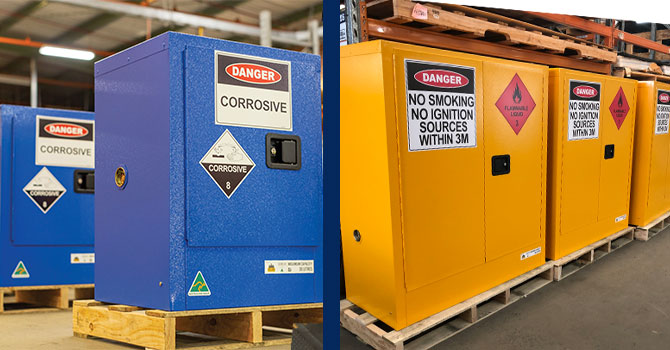
Flammable vs corrosive cabinets are specifically designed to address the unique risks associated with each type of substance. One of the primary distinctions lies in their colour-coding: our range of Spill Crew flammable cabinets are power-coated yellow, while our corrosive cabinets are blue. This clear colour differentiation ensures that they are clearly identifiable and avoids storing potentially dangerous materials together, preventing cross contamination.

Both types of cabinets must feature compliant danger signage and DG diamonds to communicate the nature of the hazards contained within effectively. Additionally, corrosive storage cabinets include poly corrosion-resistant trays or liners inside. These trays protect the cabinet structure from damage caused by acidic or alkaline substances, extending its lifespan and maintaining safety standards.

Australian Standards Governing Chemical Storage: AS1940 and AS3780 Explained

Australian Standards play an important role in ensuring the safe storage and handling of hazardous materials. Two key standards governing chemical storage are AS1940 and AS3780. AS1940 outlines requirements for the safe storage and handling of flammable and combustible liquids, helping to minimise fire and explosion risks in the workplace. AS3780 focuses on the storage and handling of corrosive substances, providing guidance on containment, segregation and safe storage practices to reduce the risk of chemical reactions, leaks and environmental harm.

To support compliance with hazardous chemical and dangerous goods regulations in Australia, businesses are often required to follow recognised Australian Standards such as AS1940 and AS3780. These standards provide widely accepted guidance on areas including signage, ventilation, segregation of incompatible substances, spill containment and regular inspections. Understanding and implementing these requirements helps organisations maintain workplace safety, support regulatory compliance, and protect personnel, property and the environment from potential chemical hazards.

Design Features and Safety Requirements for Flammable Safety Cabinets under AS1940

Flammable safety cabinets manufactured to comply with AS1940 are designed to reduce the risks associated with the storage of flammable and combustible liquids in the workplace. These cabinets are constructed from double-walled steel with an insulating air gap to provide increased fire resistance in the event of an emergency. Key design features include self-closing and close-fitting doors, spill containment sumps, flame arrestor vents, clear hazard signage and secure locking mechanisms. Cabinets must also be positioned away from ignition sources and installed in well-ventilated areas to help minimise the risk of fire or vapour build-up.

AS1940 also outlines important operational and safety requirements for the use of flammable liquid storage cabinets. This includes limits on storage quantities, segregation of incompatible substances, regular inspections and proper labelling of stored chemicals. Businesses should ensure cabinets remain in good condition and that spills, leaks or damaged containers are addressed immediately. Following these requirements helps organisations improve workplace safety, reduce fire hazards and support compliance with hazardous chemical storage regulations in Australia.

Design Features and Safety Requirements for Corrosive Storage Cabinets under AS3780

Corrosive storage cabinets manufactured to comply with AS3780 are designed to safely contain acids, alkalis and other corrosive substances that may pose risks to personnel, equipment and the environment. These cabinets are constructed from powder-coated steel and fitted with polyethylene spill trays on each shelf to provide improved chemical resistance and assist with containing leaks or spills. Key design features include spill containment sumps, adjustable shelving, ventilation options, chemical-resistant surfaces and clear hazard identification signage. Cabinets are also designed to help prevent leaks and minimise the likelihood of incompatible chemicals reacting with one another.

AS3780 provides guidance on the safe storage and handling of corrosive substances, including the segregation of incompatible chemicals, routine inspections and maintaining appropriate spill response measures. Businesses should ensure corrosive storage cabinets are located in suitable areas away from incompatible materials and that all stored substances are correctly labelled and secured.

Selecting the Right Cabinet for Your Workplace: Practical Considerations in Australia

When selecting a hazardous chemical storage cabinet for your workplace, it is important to consider the types of substances being stored, the quantities involved and the specific risks present within the environment. Workplaces handling flammable liquids should ensure cabinets are suitable for the safe storage of Class 3 flammable substances in accordance with AS1940, while facilities storing acids or corrosive chemicals should use cabinets designed to comply with AS3780. Businesses should also assess factors such as available floor space, ventilation, accessibility, proximity to ignition sources and the need to segregate incompatible chemicals to maintain a safe working environment.

Practical considerations such as cabinet capacity, durability and day-to-day usability are also important when choosing the right solution. Cabinets used in demanding industrial environments should be constructed from high-quality materials and designed to withstand regular use while providing effective spill containment and secure storage. Features such as adjustable shelving, self-closing doors, clear hazard signage and chemical-resistant components can further improve workplace safety and efficiency. Selecting the correct cabinet not only helps support compliance with Australian hazardous chemical storage requirements, but also assists businesses in reducing risks to personnel, property and the environment.

Ensuring Safe Chemical Storage by Choosing Between Flammable and Corrosive Cabinets According to Australian Standards

Choosing the correct chemical storage cabinet is essential for maintaining a safe and compliant workplace when handling hazardous substances. Flammable safety cabinets manufactured to AS1940 help reduce the risks associated with combustible liquids, while corrosive storage cabinets designed to AS3780 provide safe containment for acids, alkalis and other corrosive chemicals.

Understanding the differences between these cabinet types and the specific requirements of the chemicals being stored helps businesses select the most suitable solution for their workplace. By following recognised Australian Standards and implementing proper storage practices, organisations can improve safety, support compliance and better protect personnel, property and the environment from potential hazards.

« Back

Sign up to our newsletter